Loading image...
Planters
Durable, and on-trend planters
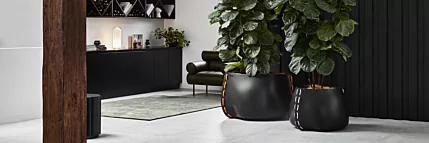
Blinde Design’s collection of concrete planters are designed to make a design statement while providing a practical solution. Crafted from Fluid™ Concrete in three natural hues, these durable outdoor/indoor plant pots look stunning as a singular feature; as a set they look spectacular. Available in a range of sizes, our collection of robust, modern planters will complement a range of architectural styles.
Models
Showing 10 items of 10
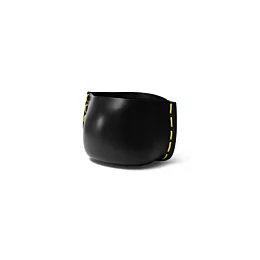
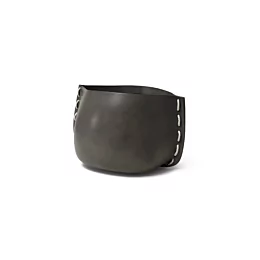
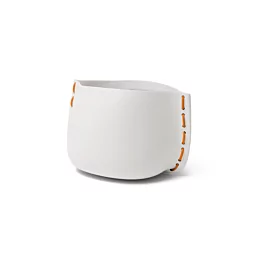
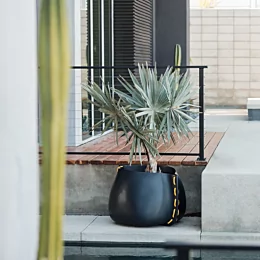
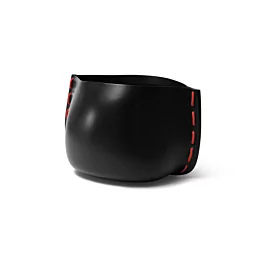
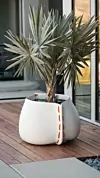
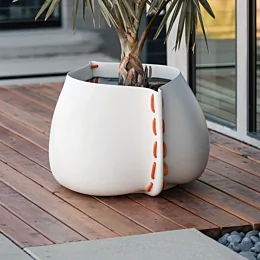
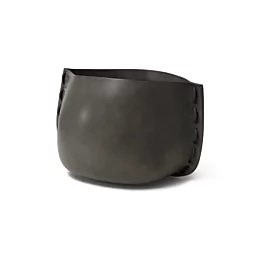
Stitch 25 Concrete Planter · Blinde Design
Stitch 50 Concrete Planter · Blinde Design
Stitch 75 Concrete Planter · Blinde Design
Stitch 100 Concrete Planter · Blinde Design
Stitch 125 Concrete Planter · Blinde Design
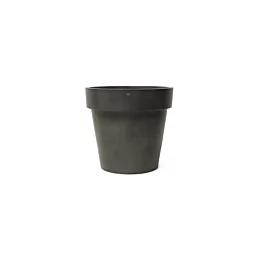
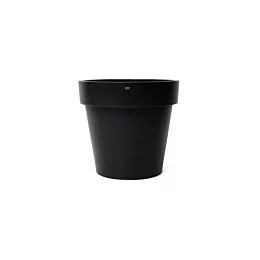
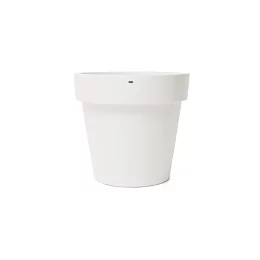
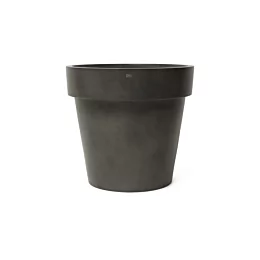
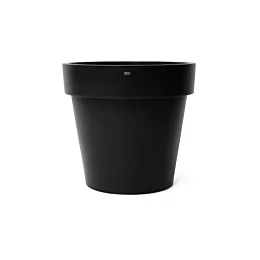
Classic 25 · Blinde Design
Classic 50 · Blinde Design
Classic 75 · Blinde Design
Classic 100 · Blinde Design
Classic 125 · Blinde Design
Loading image...
Elegant and functional
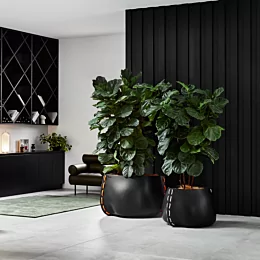
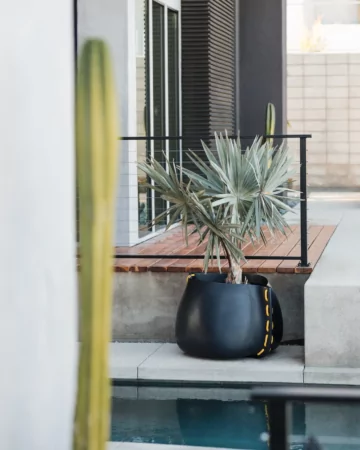
These outdoor/indoor planters combine striking sculptural shape with functionality. Streamlined curves enable a multitude of planting solutions. A perfect blend of aesthetics and utility.
Loading image...
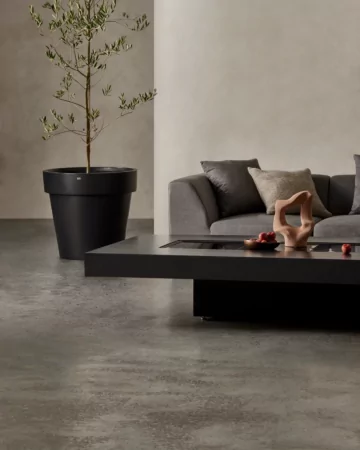
Statement pieces
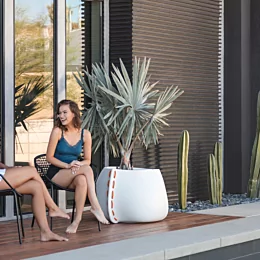
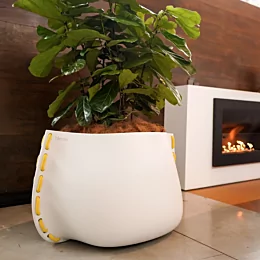
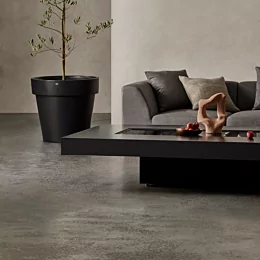
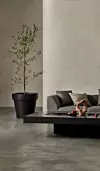
Standalone, in different size combinations or clustered together, Blinde’s modern concrete plant pots add panache to a natural or architectural environment.
Versatile
Available in multiple sizes to suit all locations, outdoor and indoor room sizes, and choice of plants.
Loading image...


Durability
Our Planters Our planters are crafted using Fluid™ Concrete Technology, an incredibly strong, lightweight and environmentally friendly material.
Loading image...

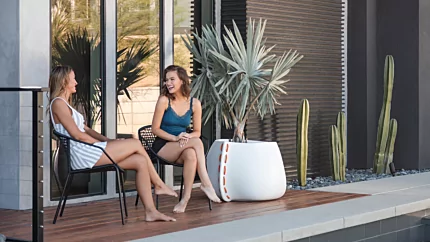
Learn More
FAQ's
Are concrete planters heavy?
Concrete planters are denser than many alternatives, but Blinde Design's Fluid Concrete Technology uses thin-wall construction and lightweight green cement to create pieces that are practical to position and reposition.
A mid-sized planter weighs approximately 69 lb [31.3 kg], comparable to a large outdoor lounger cushion, easily manageable with two people or a hand truck. The material's substantial feel reflects engineering integrity, not impracticality. Concrete resists water absorption, UV damage, mould, and weathering, supporting decades of outdoor use without degradation or discolouration. Unlike lighter resin alternatives that fade in sunlight or composite materials prone to cracking, Blinde Design's concrete offers longevity through material honesty.
Each planter is handcrafted with a unique serial number and carries recognition for design excellence (2019 European Product Design Award, Good Design Award). The brand produces five size increments; smaller options are noticeably lighter, while larger formats distribute mass across a wider footprint for stability. If repositioning is central to your space plan, smaller models or wheeled bases offer practical flexibility.
What are the best planters for indoor vs outdoor use?
Blinde Design's concrete planters work beautifully in both settings because Fluid Concrete resists moisture, UV exposure, stains, and freeze-thaw cycles: the very conditions that challenge traditional planters. The waterproof nano-coating means the same planter can anchor your outdoor patio and then move indoors for a winter season.
The real strength is design continuity. The Classic and Stitch ranges come in coordinated finishes (Natural, Graphite, Bone) and sizes that flow across indoor and outdoor spaces. For the Stitch range, customisable rope stitching in six colours lets you extend your interior palette outside. Both series include drainage cells and removable plant bags, giving you flexibility in how you plant.
One practical note: indoors, the planters are presentation pieces, so use them with a waterproof interior pot and drip tray to protect your floors. Outdoors, they handle seasonal extremes without degradation.
Both ranges earned the 2019 European Product Design Award and Good Design Award, and Fluid Concrete is made from green cement and 95% recycled materials. They're designed as long-term investments, not seasonal accessories.
Can concrete planters be left outside all year round?
Yes, Blinde Design concrete planters are engineered for year-round outdoor use. Built from Fluid™ Concrete, they resist the main threats to concrete durability: freeze-thaw cycles, water infiltration, mould, and mildew. The material's unibody construction eliminates join lines that harbour moisture, and a stain-resistant barrier coating protects against UV damage and weather exposure.
To maximise lifespan, use a purpose-built waterproof inner pot with drip tray, since direct exposure to damp soil impacts the concrete's integrity. Keep planters completely dry before covering, uncover regularly to allow moisture to evaporate, and apply a penetrating concrete sealer every six months (or every three months in commercial or high-humidity settings). Fluid™ Concrete is fully cured and non-hydraulic, giving it greater resistance to moisture absorption than standard poured concrete, so your planters maintain their finish and structural integrity across seasons.
Do planters need drainage holes?
Blinde Design concrete planters are designed as presentation vessels with an internal drainage system, not traditional drainage holes in the base.
Each planter incorporates a specialised drainage cell, an internal plant bag, and Fluid Concrete construction sealed with a waterproof nano-coating. For planting, pair the vessel with a purpose-built waterproof inner pot and drip tray.
This engineering reflects a considered design philosophy: concrete planters as architectural elements, not standard soil containers. The nano-coating protects the concrete from moisture and damp soil exposure, preserving the material's structural integrity over time. The internal drainage cell manages water movement within the vessel while the inner pot handles root moisture directly, giving you the freedom to plant as you choose without risk to the concrete. Available in the Classic and Stitch series, in five sizes from 25 cm to 125 cm, each planter is suited to both indoor and outdoor settings.
What material is best for outdoor planters?
Fluid Concrete is the best choice for planters that balance durability, design integrity, and long-term sustainability. Blinde Design engineers this proprietary material from 95% recycled natural materials combined with green cement, and it's resistant to moisture, stains, heat, UV rays, and weighs considerably less than traditional concrete, so you can relocate pieces without mechanical fixing.
Each planter receives a waterproof nano-coating and uses an internal unibody mould construction with no visible join lines that harbour moisture or mould. This means years of reliable drainage and shape retention.
Fluid Concrete also ages gracefully. The material naturally develops subtle patina over time, becoming richer rather than degrading. Unlike materials that require active preservation, these planters thrive through minimal care: a damp cloth wipe and an annual application of clear car polish for UV and water protection. Beyond durability, the material absorbs CO₂ during curing and is fully recyclable at end-of-life, aligning with sustainable design values without compromise.
Available in three organic finishes (Natural, Graphite, Bone) across five sizes in both Classic and Stitch series, so you'll find pieces that match your aesthetic.
How do I clean and maintain concrete planters?
Concrete planters from Blinde Design require minimal maintenance, thanks to Fluid™ Concrete's proven durability. Clean regularly with a damp microfibre cloth to remove dust and light surface marks. Once dry, apply a quality car polish to restore colour depth, create a water-repellent barrier, and remove watermarks or light scratches.
The material resists water, fire, insects, mould, and weathering; fully cured concrete doesn't retain moisture, making freeze-thaw cycles a non-issue. For interior use, ensure the planter sits in a purpose-built waterproof pot with a drip tray to protect from water leakage; exposure to damp soil can impact the planter's lifespan.
Fluid™ Concrete is stain-resistant against coffee, wine, vinegar, oil, and common household substances. The seamless construction with no join lines means dirt doesn't accumulate in crevices. If minor chips occur, a touch-up pen can be used, or contact your Blinde Design distributor for the appropriate match. The planter's serial number allows easy identification and care guidance throughout its life.
How do I choose the right planter for my space?
Selecting the right planter starts with three questions: What role should it play in your space? What's your preferred aesthetic? And how much visual impact are you after?
Blinde Design's two ranges help you answer these strategically. If you're looking for a sculptural, statement piece, the Stitch range features distinctive rope detailing (available in six colours) and won the 2019 European Product Design Award, ideal when you want the planter to be the focal point. The Classic range offers clean, contemporary lines that complement rather than dominate, working beautifully in clustered arrangements or as background greenery support.
Size matters for proportion and presence. Compact planters (380 mm [15.0 in]) work as accents on shelves or side tables. Larger sizes (up to 1,060 mm [41.7 in]) anchor outdoor corners or entry sequences, creating architectural focal points. Both ranges are handcrafted from Fluid Concrete Technology, which means they'll weather beautifully outdoors whilst remaining suitable for interior spaces. Their sealed construction resists water, frost, fire, insects, and staining, requiring minimal maintenance.
Remember: planters are presentation vessels, so pair your Blinde Design planter with an inner waterproof pot and drip tray to protect the concrete. This practical layer doesn't diminish the visual impact; it ensures longevity. Choose based on where your planter sits in your design hierarchy, statement or supporting role, then let size, range, and colour do the rest.
What is the difference between a planter and a pot?
In common usage, "planter" and "pot" are often used interchangeably, but they represent different functions. A pot is primarily a container for growing plants, designed around horticultural needs like drainage and root space. A planter is fundamentally a design statement, an outer vessel that frames your greenery as part of your interior or outdoor aesthetic.
Blinde Design planters operate this way: they're decorative outer vessels crafted in Fluid Concrete, not standalone growing containers. Each planter is handmade and serial-numbered, positioning it as a durable design investment rather than a consumable garden tool. To use a Blinde planter, you place a dedicated waterproof pot inside it, allowing the planter to focus on what it does best: transforming your space through craftsmanship and material presence without compromising plant health.
How do I style multiple planters together?
Styling multiple planters together is about combining size, colour, and spatial arrangement to create a curated outdoor display. Blinde Design's concrete planters look sensational as a set. The Classic range offers five sizes in three organic colours (Natural, Graphite, Bone), while the Stitch range adds six rope-stitch colour options across the same size progression. Start with odd numbers (three or five planters) rather than pairs, which creates visual rhythm without symmetry.
Vary heights and sizes, then cluster larger planters at the back or centre with smaller ones stepping forward or to the sides. This creates depth and draws the eye through the arrangement. You can mix the two ranges together; they share the same size increments, so they work harmoniously.
Consider colour strategy: either coordinate the rope stitching across planters for cohesion, or use contrasting stitch colours as deliberate focal points. You can also line planters up to define outdoor zones. A row of mixed sizes frames a dining area or patio edge, maintaining open sightlines while dividing space.
Because Fluid Concrete planters are lightweight, you can position and reposition them easily without mechanical fixing. This means your arrangement can evolve with seasons and plants. The planters age gracefully alongside your garden, becoming more refined rather than dated.
What size planter do I need?
Blinde Design planters come in five sizes, numbered 25 to 125, suited to different spaces and plant arrangements. The Classic collection features cube-shaped proportions ideal for structured compositions: the largest (125) spans over 1 metre [39.4 in] wide, while the smallest (25) works as a tabletop accent. The Stitch collection uses elongated proportions perfect for mixed plantings or linear arrangements, with sizes ranging from roughly 700 mm [27.5 in] to 1,200 mm [47.2 in] long.
Start by matching planter scale to your space. A large statement piece (100 or 125) anchors a generous outdoor area or living room corner; mid-range sizes (50 or 75) suit standard residential zones; smaller sizes (25) layer into grouped arrangements or tight indoor spaces. The choice depends less on plant root volume and more on visual proportion, specifically how the planter's mass and form relate to the surrounding architecture and furnishings.
Remember that planters are presentation-focused; you'll need a purpose-built waterproof pot with a drip tray inside for any internal planting. Both collections are available in three finishes (Natural, Graphite, Bone) and can work indoors or outdoors, so your sizing decision can be purely about how you want the piece to look in your space. Visit the Blinde Design website to see the collections styled at different scales, or consult a designer if you're unsure.